
IS350 AWD/IS350/IS300- Page 294
2022 Lexus iS300 Owners Manual
Table of Contents
294
6-3. Do-it-yourself maintenance
■
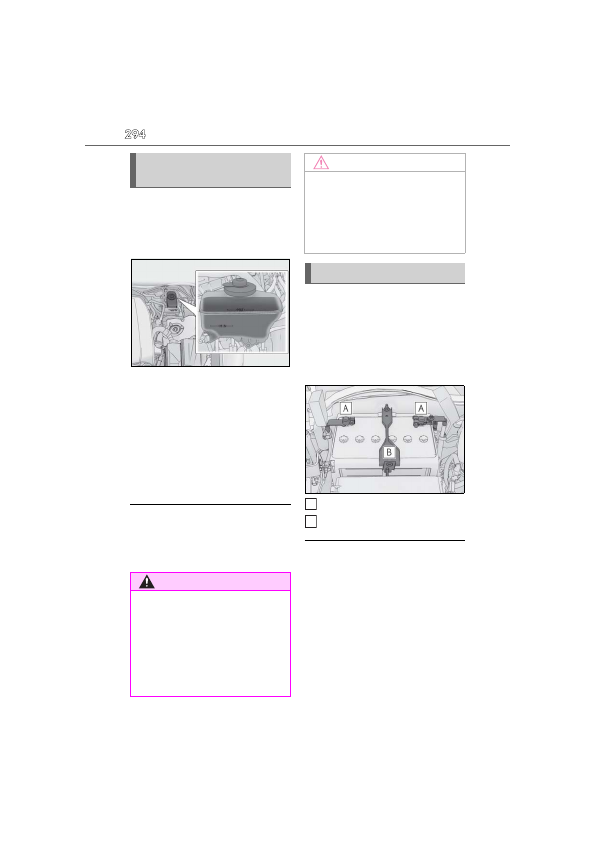
Checking fluid level
The brake fluid level should be
between the “MAX” and “MIN” lines
on the tank.
■
Adding fluid
Make sure to check the fluid type and
prepare the necessary item.
Fluid type
SAE J1703 or FMVSS No.116 DOT 3
brake fluid
Item
Clean funnel
■
Brake fluid can absorb moisture from
the air
Excess moisture in the brake fluid can cause
a dangerous loss of braking efficiency. Use
only newly opened brake fluid.
Check the battery as follows.
■
Battery exterior
Make sure that the battery terminals
are not corroded and that there are no
loose connections, cracks, or loose
clamps.
Terminals
Hold-down clamp
■
Before recharging
When recharging, the battery produces
hydrogen gas which is flammable and
explosive. Therefore, observe the following
before recharging:
●
If recharging with the battery installed on
the vehicle, be sure to disconnect the
ground cable.
●
Make sure the power switch on the char-
ger is off when connecting and discon-
necting the charger cables to the battery.
Checking and adding the brake
fluid
WARNING
■
When filling the reservoir
Take care as brake fluid can harm your
hands and eyes and damage painted sur-
faces.
If fluid gets on your hands or in your eyes,
flush the affected area with clean water
immediately.
If you still experience discomfort, see a
doctor.
NOTICE
■
If the fluid level is low or high
It is normal for the brake fluid level to go
down slightly as the brake pads wear out
or when the fluid level in the accumulator
is high.
If the reservoir needs frequent refilling,
there may be a serious problem.
Battery
A
B
Detailed Information for 2022 Lexus iS300 Owners Manual
Lists of information found in 2022 Lexus iS300 Owners Manual - Page 294
- 3. Do-it-yourself maintenance ■ Checking fluid level The brake fluid level should be between the “MAX” and “MIN” lines on the tank.
Related Documents for 2022 Lexus iS300 Owners Manual
 All trademarks are property of their respective owners. Tightrope
Interactive
All trademarks are property of their respective owners. Tightrope
Interactive